
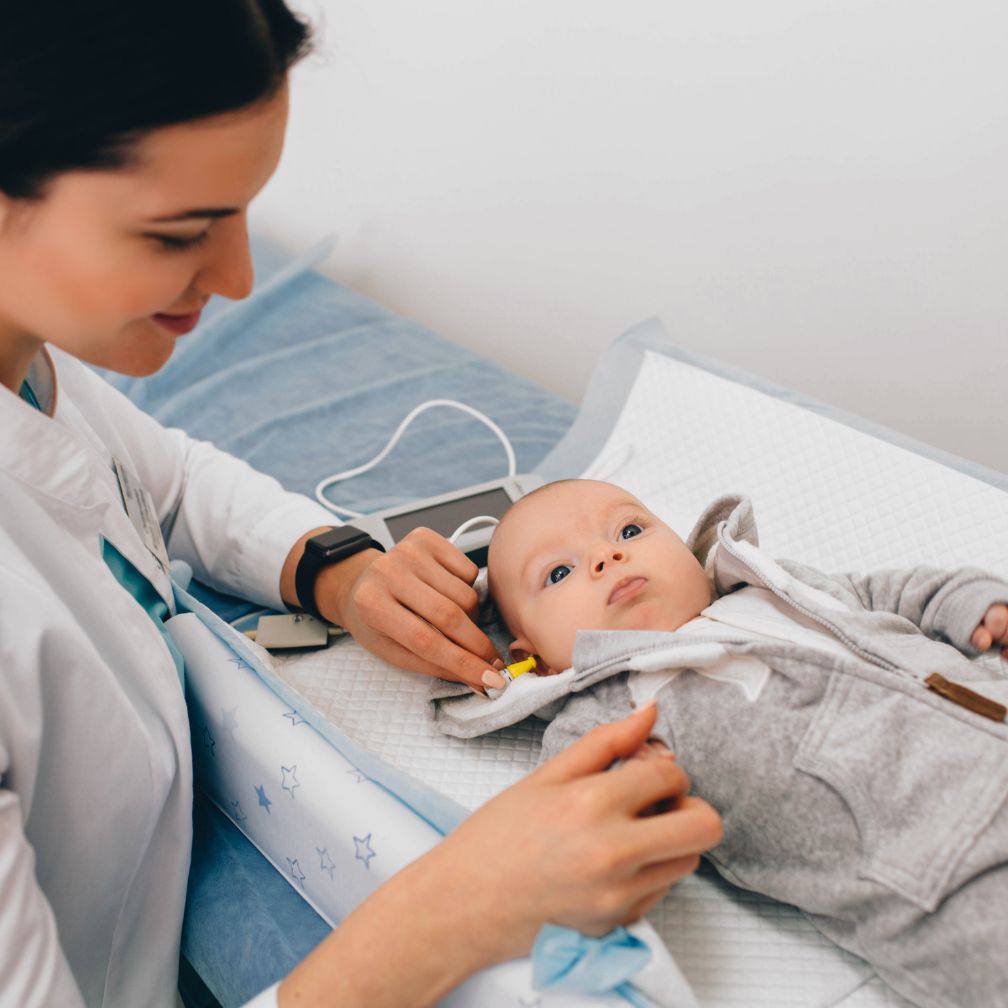
For fresh parents, learning that a child presents a hearing difficulty can prove extremely emotionally overwhelming. But the hopeful fact stands that through swift diagnosis and clinical therapy, kids experiencing auditory impairment are able to prosper wonderfully. Truly, these infants routinely acquire core language skills, social capabilities, and firm bonds with people in their lives, securing a prosperous life!
Two of the most effective tools for helping infants with hearing loss include custom hearing aids and cochlear implants. In the upcoming breakdown, we dissect their core operations and outline how to select the proper device for your child.
Analyzing Infant Auditory Deficits
Hearing deficits among babies frequently result from an array of medical influences, including:
- Identified genetic predispositions (even without recorded familial lineage)
- Prenatal viral exposures such as cytomegalovirus (CMV) or rubella
- Acute complications during birth, including lack of oxygen or premature birth
- Particular pharmaceutical treatments utilized inside specialized newborn intensive units
What stands as the primary clinical priority? Prompt diagnostic confirmation. This necessity explains why babies in United States hospitals complete hearing tests prior to leaving the birth facility. Certified pediatric audiology experts consistently follow the official “1-3-6” operational timeline:
- Screened within 1 month of age
- Formal medical diagnosis secured prior to 3 months of age
- Intervention (with hearing devices or therapy) initiated within 6 months of age
Achieving these explicit timeline goals offers infants their best chance at healthy speech, verbal communication, and brain development. If you wish for additional counsel concerning these newborn screens, your child’s pediatrician will gladly advise you!
Understanding Amplification Devices for Infants
For infants diagnosed with mild to severe auditory loss, electronic hearing aids typically represent the primary clinical remedy. These miniature, body-worn units amplify surrounding audio, enabling infants to perceive spoken words and environmental noise with greater clarity.
Modern infant hearing instruments function as:
- Dermatologically and structurally safe for infants aged just a few weeks
- Manufactured with cushioned, protective ear molds that are replaced as the baby grows
- Designed with locking battery compartments and child-focused protective mechanisms
- Custom-programmed by a certified pediatric audiologist to fit your baby’s exact hearing profile
As your baby grows, wearable units demand periodic adjustments to ensure proper fit and effectiveness.
Cochlear Implant Options for Newborns
When a child presents with severe to profound sensorineural impairment without sufficient improvement from hearing aids, a cochlear implant is often recommended. Unlike standard acoustic hearing devices, cochlear implant systems:
- Require placement through a routine surgical procedure under standard general anesthesia
- Direct sound past non-working areas across the inner ear system
- Process incoming audio into electrical signals that activate the hearing nerve directly
Standard cochlear implants remain:
- Formally FDA-cleared for pediatric patients as young as 9-12 months
- Most successful when integrated with early speech therapy and strong parental involvement
- Prescribed solely after rigorous joint evaluations by a pediatric audiology clinician and an ENT specialist
Such a comprehensive process requires high-resolution imaging, detailed hearing tests, and detailed consultations regarding anticipated long-term progress.
Contrasting Hearing Aids with Cochlear Implants
- Mild to severe levels of impairment utilize Hearing Aids; Severe to profound levels of loss demand Cochlear Implants
- Non-Invasive external fitting: Hearing Aids; Surgical internal implantation: Cochlear Implants
- Standard sound amplification logic: Hearing Aids; Converts Sound Electrical Signals: Cochlear Implants
- Fitting starts at early infancy: Hearing Aids; Surgery can begin at 9-12 months: Cochlear Implants
Concluding Guidance on Pediatric Hearing Technology
If your infant is diagnosed with a hearing condition, you have access to outstanding technological paths and dedicated expert support. With active assistance from pediatric hearing professionals, many children go on to develop speech and language proficiency that rivals their normal-hearing peers.
Whether your baby benefits most from custom hearing aids or a cochlear implant system, early action produces a lifelong positive impact.
Do you need professional advice regarding your baby’s current hearing health? Contact our clinical team today to arrange a comprehensive evaluation and customized treatment program.